
Thermal Imaging Cameras

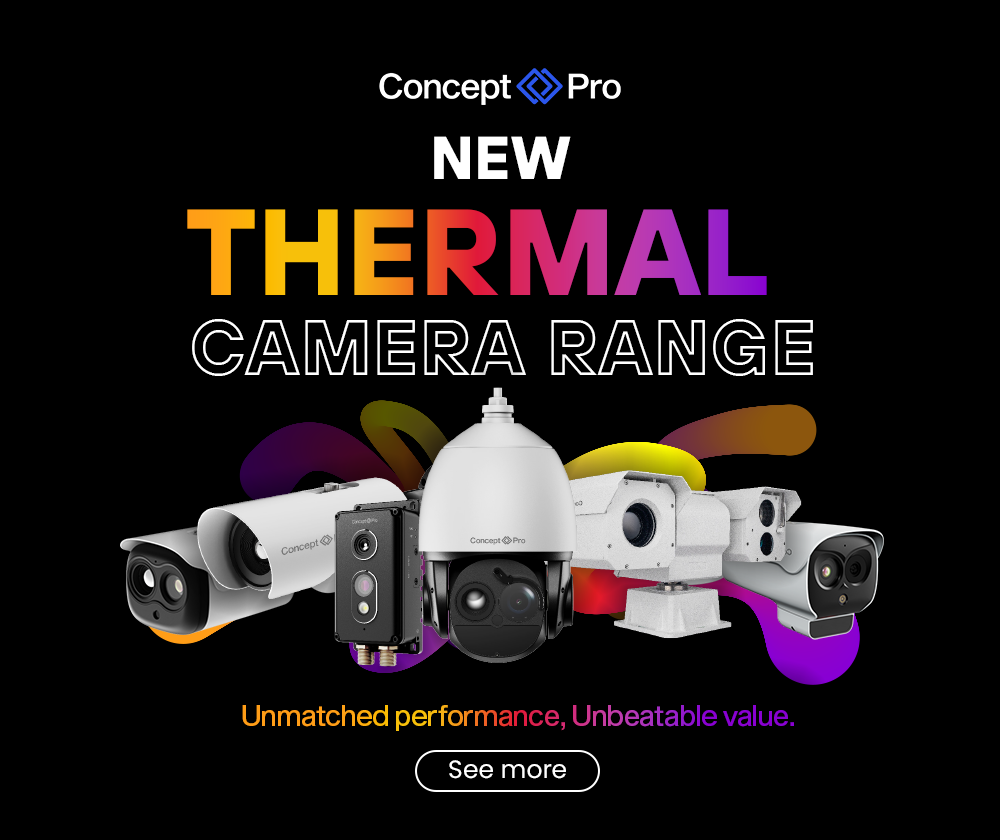
Thermal imaging CCTV cameras use infrared technology to detect heat signatures instead of visible light, allowing them to see in complete darkness, smoke, fog, or other challenging conditions. This makes them ideal for 24/7 surveillance, perimeter protection, fire detection, and industrial safety monitoring. Thermal cameras are highly effective at detecting humans, vehicles, or other heat-emitting objects over long distances, even in total darkness. Browse our full range of thermal IP cameras from Concept Pro & Uniview below.
When you order from Videconyou gain access to dedicated account managers and UK – based technical support, as well as live product demonstrations and training sessions.
Next day delivery is also available when you place order before 5:30pm, we get you the right product, at the right price in the right place.
How do CCTV thermal imaging cameras work?
Thermal imaging cameras detect infrared radiation emitted by objects and convert it into visible images. Thermal CCTV cameras use specialised sensors to measure heat signatures across a scene. The camera's lens focuses infrared energy onto a detector array. This data is processed and displayed as a thermographic image where warmer objects appear in brighter colours. Thermal technology operates effectively in complete darkness, fog, and smoke, which makes these cameras very suitable for surveillance operations.
What are CCTV thermal imaging cameras used for?
Thermal imaging cameras serve diverse security and monitoring purposes across industrial, commercial, and residential settings. They're commonly deployed for perimeter security, detecting unauthorised intruders in low-light conditions and adverse weather. Industrial facilities often use thermal surveillance to monitor equipment for overheating risks, and identify maintenance issues before failures occur. Border security, airport screening, and the police rely on thermal technology for effective security screening and identification.
What can be detected by CCTV thermal imaging cameras?
Thermal cameras detect heat-emitting objects and living beings based on their temperature signatures. They effectively identify people, animals, and vehicles through smoke, fog, dust, and darkness where visible-light cameras will struggle to form an accurate picture. It can spot heat leaks from buildings, revealing poor insulation and energy inefficiency. Industrial applications include detecting equipment malfunctions through abnormal temperature patterns and identifying electrical faults in switchboards, Thermal imaging also detects fire hotspots in early stages, making it valuable for fire detection systems.
What should I look for in a CCTV thermal imaging camera?
Key specifications include thermal sensitivity, resolution measured in pixels, and lens options suited to your monitoring distance. Verify the camera's temperature measurement accuracy and whether it offers real-time temperature readings for critical applications. Consider the frame rate and whether the system integrates with your existing CCTV infrastructure. Evaluate durability features, particularly for outdoor installations, and housing suitable for harsh environments. Check whether the thermal camera supports analytics, alarm triggers based on temperature thresholds, and if it offers motorised lens adjustment for flexibility. At Videcon we give you detailed product specifications on all of our cameras, so you can see for yourself what you’re getting when you browse our thermal imaging cameras on our website.